ISWC 2026 Closes in Bari With a Push on GenAI Ontology Editing
 Common Core Ontologies Editorial Team
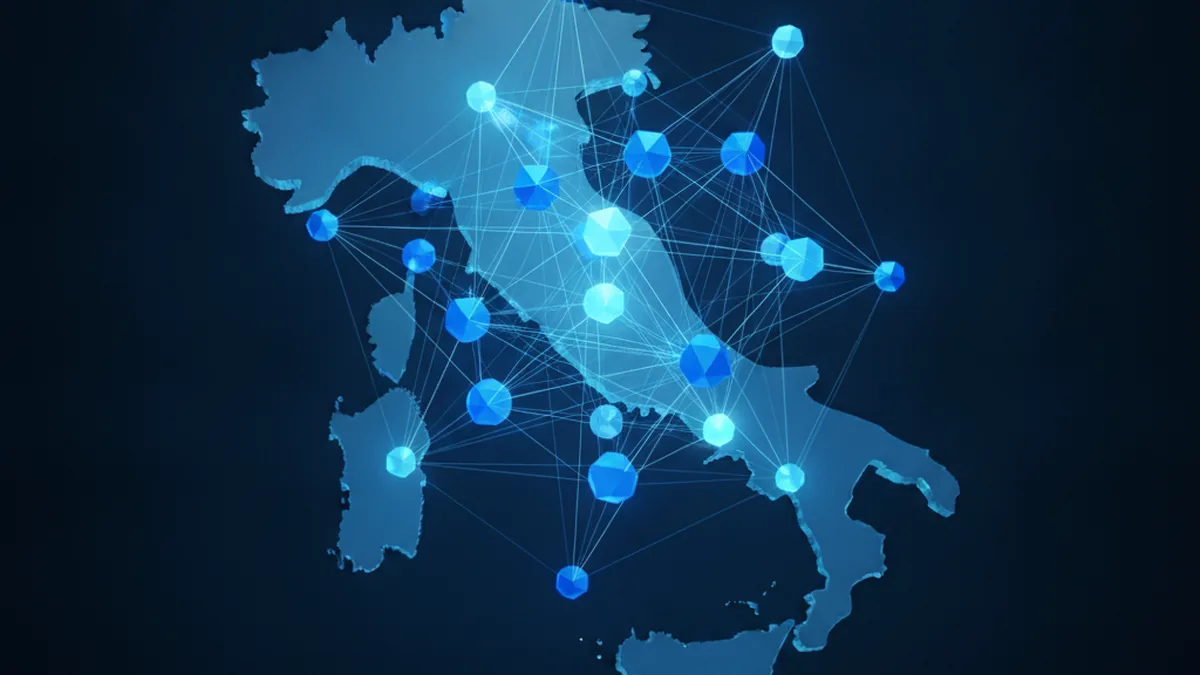
The 25th International Semantic Web Conference (ISWC 2026) ran October 25–29 at The Nicolaus Hotel in Bari, Italy, closing out today as the semantic web community's largest annual gathering of researchers and practitioners working on ontologies, knowledge graphs, and linked data. Alongside the usual research track, one of the week's most practically oriented sessions was a hands-on tutorial from Graphwise (the semantic technology vendor formerly known as Ontotext) titled "SCOPE — Using SHACL and OWL in Combination for Practical Knowledge Graph Editing," held Monday, October 26.
Why pairing SHACL with OWL is the point
OWL and SHACL solve different problems and get confused for solving the same one. OWL reasoning infers new facts from what an ontology asserts; SHACL validates that incoming data actually conforms to the shape a team expects before it gets anywhere near production. Teams that pick one and skip the other tend to discover the gap the hard way — either an ontology that reasons correctly but accepts malformed instance data, or a validation layer with no inference to catch what the data model itself permits that it shouldn't. The ISWC tutorial walked through a four-part agenda: the practical tension between the two standards, bootstrapping an ontology and tool setup, hands-on data modeling exercises, and open discussion — explicitly framed around GenAI-assisted ontology editing rather than either technology in isolation.
GenAI in the editing loop, not just the output
What made the session notable is where GenAI showed up: not as a chatbot answering questions about an ontology after the fact, but inside the editing workflow itself, drafting candidate SHACL shapes or OWL axioms for a modeler to review against the existing graph rather than inventing a parallel one. That distinction matters for any team running a production ontology, including mid-level suites like CCO that extend BFO across multiple domains: an LLM-assisted suggestion is only useful if it is checked against the suite's existing class hierarchy and disjointness axioms before it merges, not after.
Outside the workshop track, the broader signal from ISWC this year is consistent with what enterprise buyers have been asking vendors for all through 2026: ontology tooling that treats OWL and SHACL as complementary layers of one validated knowledge graph, with generative tooling embedded to speed up the tedious parts of modeling without removing the review step. Organizations building that kind of pipeline internally — reasoning layer, validation layer, and an AI-assisted editing loop in between — are increasingly turning to outside GenAI integration work to wire the generative component into an existing graph database and CI validation pipeline rather than building the glue code from scratch.
What to watch next
Graphwise has not yet published slide decks or a recording timestamp for the SCOPE session publicly, and ISWC's main-track best paper awards for 2026 had not been announced as of this writing. The practical signal worth tracking over the next few months is whether other major triple-store and ontology-tooling vendors follow Graphwise's lead in shipping SHACL+OWL combined workflows with generative assistance built in, rather than treating each as a separate product.
Keep reading
W3C Publishes SPARQL 1.2 Query Language Working Draft
W3C's RDF-star Working Group published a new SPARQL 1.2 Query Language Working Draft on Oct 25.

Using CCO for Data Interoperability
How a shared mid-level ontology resolves conflicting schemas across systems without a bespoke matcher per integration.